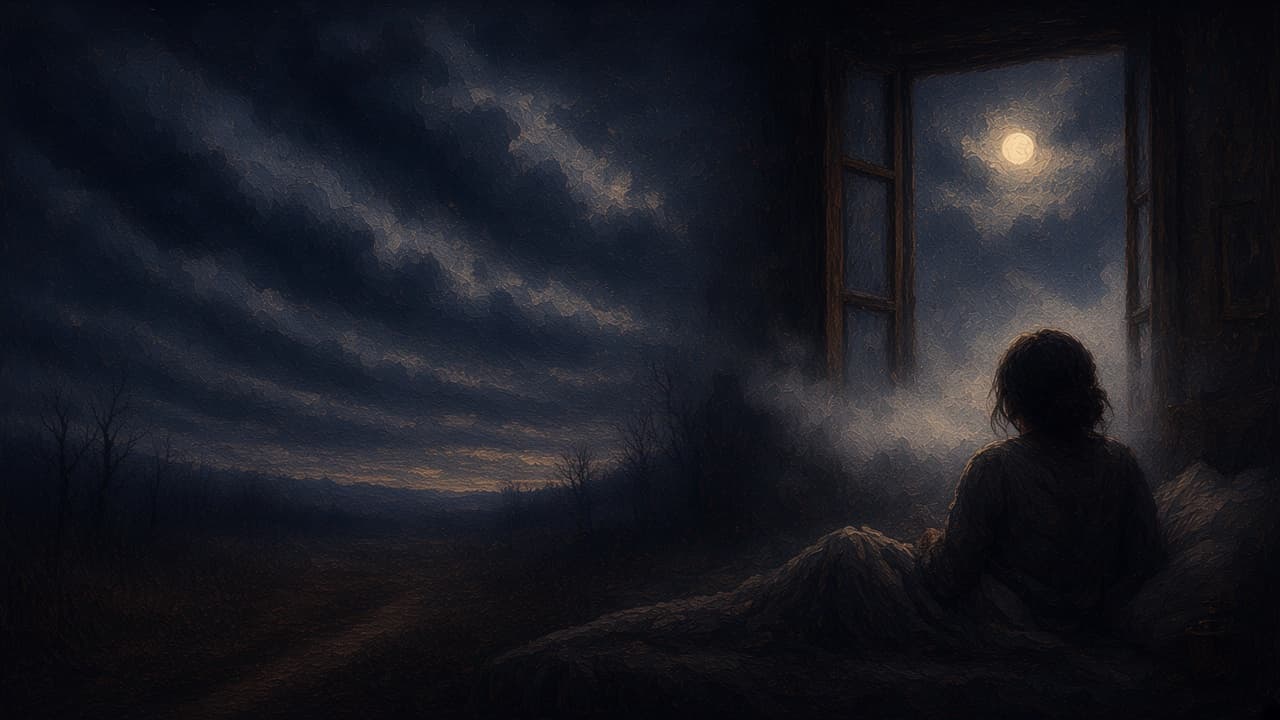
One in five people have experienced sleep paralysis, a frightening state that can evoke intense fear and confusion. Harvard neuroscientist Baland Jalal has dedicated his career to studying this phenomenon, which he describes as a brain glitch that can lead to terrifying experiences. Jalal believes that exploring the borderlands of sleep, where sleep paralysis occurs, may provide deeper insights into the workings of the mind.
Jalal's new book, The Phantom Mind, delves into the subjective experiences associated with sleep paralysis. He notes that while he examines brain regions and neurochemicals, the study of sleep paralysis has deepened his interest in the mysteries of consciousness. He claims that the experience can feel so real that it can leave lasting trauma, particularly for those who encounter it without prior knowledge.
Many individuals report waking up unable to move, often feeling a malevolent presence in the room. This sensation can be so vivid that it resembles the peak fear of a horror movie. Personal accounts, including Jalal's own teenage experiences, highlight how these episodes can lead to a struggle for understanding and meaning. Jalal recalls a moment in his youth when he felt threatened by a ghostly figure, prompting him to seek answers through the study of the brain.
During sleep paralysis, individuals may open their eyes and perceive their surroundings, sometimes even witnessing distorted reflections of themselves. The experience blurs the line between wakefulness and sleep, as a glitch occurs in the brain's functioning. In REM sleep, the body is paralyzed to prevent acting out dreams, but when the sensory cortex awakens while the body remains immobilized, the result can be a disorienting mix of awareness and hallucination.
The presence often reported during these episodes, which may feel like a weight on the chest, arises from the brain's attempt to comprehend the paralysis. Jalal explains that when individuals are unable to move or speak, their minds may interpret this vulnerability as a threat from a predator, leading to the hallucination of a ghost or other entity.
Jalal suggests that the brain's storytelling nature plays a role in these experiences, as it tries to make sense of the information available. Distortions in body image perception can lead to hallucinations of figures in the room, which may be interpreted as ghosts or doppelgangers. These experiences can challenge one's sense of self, as individuals grapple with the confusion of their identity during episodes of sleep paralysis.
The complexities of sleep paralysis continue to intrigue researchers like Jalal, who see it as a gateway to understanding the intricate workings of the human mind and consciousness.
Image: Paranormal Country · Source: theguardian.com